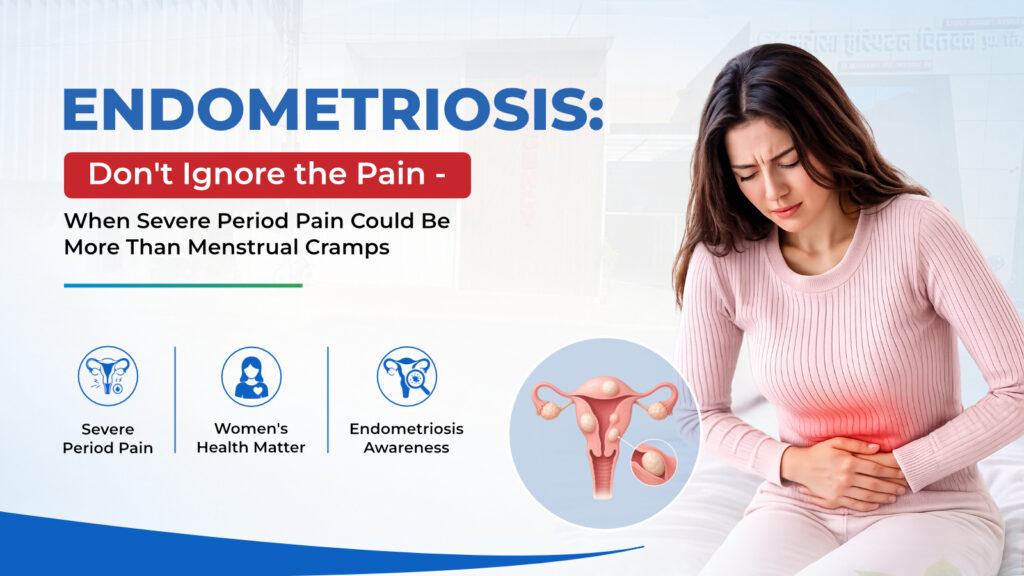
Many women experience menstrual cramps, and mild discomfort during a period is often considered normal. But when the pain becomes so severe that it affects work, school, sleep, or everyday activities, it deserves medical attention.
One possible cause is endometriosis, a long-term gynecological condition that affects millions of women worldwide. Unfortunately, many women live with symptoms for years because severe period pain is often dismissed as “just part of having periods.”
At Nepal Bharosha Hospital, our Department of Obstetrics and Gynecology evaluates women with severe menstrual pain, chronic pelvic pain, fertility concerns, and other gynecological conditions. Identifying the cause early can help guide treatment and improve quality of life.
What Is Endometriosis?
Endometriosis develops when tissue similar to the lining of the uterus grows outside the uterus. These growths are most often found on the ovaries, fallopian tubes, or the lining of the pelvis, though they can occasionally appear in other parts of the body.
Like the uterine lining, this tissue responds to monthly hormonal changes. Unlike normal menstrual tissue, however, it has no way to leave the body. This can lead to inflammation, scar tissue, and ongoing pelvic pain.
It’s also important to know that symptoms don’t always match the severity of the disease. Some women with mild endometriosis have intense pain, while others with more advanced disease experience few symptoms.
Common Symptoms of Endometriosis
Symptoms vary from person to person, but they often include:
- Severe menstrual cramps that interfere with daily activities
- Pelvic pain between periods
- Pain during or after sexual intercourse
- Pain while passing urine or having bowel movements during menstruation
- Heavy or irregular menstrual bleeding
- Difficulty becoming pregnant
- Fatigue, bloating, nausea, or lower back pain during periods
These symptoms can also occur with other gynecological conditions, making a medical evaluation essential for an accurate diagnosis.
When Is Period Pain a Warning Sign?
Menstrual cramps shouldn’t stop you from living your normal life. You should consider seeing a gynecologist if:
- Pain keeps you from work, school, or daily activities.
- Pain medication no longer provides relief.
- Your symptoms become worse over time.
- Pelvic pain continues after your period ends.
- Intercourse becomes painful.
- You’re having difficulty becoming pregnant.
- Heavy bleeding occurs with severe cramping.
Ignoring ongoing symptoms can delay diagnosis and treatment.
Why Early Diagnosis Matters
Although endometriosis is a chronic condition, early diagnosis can make managing symptoms much easier.
An early assessment may help:
- Identify the cause of persistent pelvic pain
- Improve symptom control
- Reduce delays in treatment
- Support future fertility planning
- Improve overall quality of life
Not everyone with painful periods has endometriosis, but severe or persistent pain should always be assessed by a healthcare professional.
How Is Endometriosis Diagnosed?
Diagnosis usually starts with a discussion about your symptoms and a physical examination. Your gynecologist may ask about:
- Your menstrual cycle
- Where your pain occurs
- How severe your symptoms are
- Family history
- Fertility concerns
- Previous surgeries or medical conditions
Depending on your symptoms, additional tests may include:
| Assessment | Purpose |
| Pelvic examination | Checks for tenderness or abnormalities |
| Ultrasound | Looks for ovarian cysts and other pelvic conditions |
| MRI (when appropriate) | Provides detailed imaging in selected cases |
| Laparoscopy | May be recommended to confirm the diagnosis |
Not every patient needs every test. Your doctor will recommend investigations based on your symptoms and clinical findings.
Treatment Options
Treatment is tailored to each patient and depends on:
- Symptom severity
- Age
- Future pregnancy plans
- Extent of the disease
Treatment may include:
Pain Management
Medication can help relieve menstrual pain and improve day-to-day comfort.
Hormonal Therapy
Hormonal treatment may slow the growth of endometrial tissue and reduce symptoms.
Surgery
For some women, minimally invasive surgery may be recommended to remove endometriosis while preserving healthy tissue whenever possible.
Fertility Support
If you’re trying to conceive, your treatment plan can be adjusted to support your fertility goals.
Treatment decisions should always be made with a qualified gynecologist.
Living With Endometriosis
Many women manage endometriosis successfully with ongoing medical care and regular follow-up.
You can also support your overall health by:
- Staying physically active when possible
- Getting enough sleep
- Managing stress
- Eating a balanced diet
- Tracking your menstrual cycle and symptoms
- Attending follow-up appointments
These habits won’t treat endometriosis on their own, but they can support your overall well-being alongside medical care.
Gynecology Services at Nepal Bharosa Hospital
Women experiencing severe menstrual pain or ongoing pelvic symptoms can receive comprehensive evaluation through the Department of Obstetrics and Gynecology at Nepal Bharosa Hospital.
Services may include:
- Gynecology consultation
- Pelvic examination
- Diagnostic imaging
- Laboratory investigations
- Medical treatment
- Surgical assessment when appropriate
- Fertility counselling and follow-up
When needed, our gynecology team works closely with other specialists to provide coordinated care.
Frequently Asked Questions
Can endometriosis go away on its own?
Endometriosis is generally a long-term condition. Symptoms may change over time, but medical evaluation is important for proper management.
Does severe period pain always mean endometriosis?
No. Conditions such as fibroids, adenomyosis, pelvic inflammatory disease, and other gynecological disorders can also cause severe menstrual pain.
Can endometriosis affect fertility?
Yes. Some women with endometriosis have difficulty becoming pregnant, although many conceive naturally or with appropriate medical support.
At what age can endometriosis develop?
Symptoms often begin during the reproductive years and may start soon after menstruation begins.
When should I see a gynecologist?
You should arrange a consultation if period pain affects your daily life, pelvic pain continues between periods, intercourse is painful, or you’re concerned about fertility.
Don’t Ignore Persistent Period Pain
Painful periods are common, but pain that regularly disrupts your daily life is not something you should simply accept. Ongoing pelvic pain, painful intercourse, or difficulty becoming pregnant may point to an underlying condition that deserves medical attention.
If you’re experiencing symptoms that could be related to endometriosis, the Department of Obstetrics and Gynecology at Bharosha Hospital offers comprehensive evaluation and personalized care to help identify the cause and discuss the treatment options that best fit your needs.