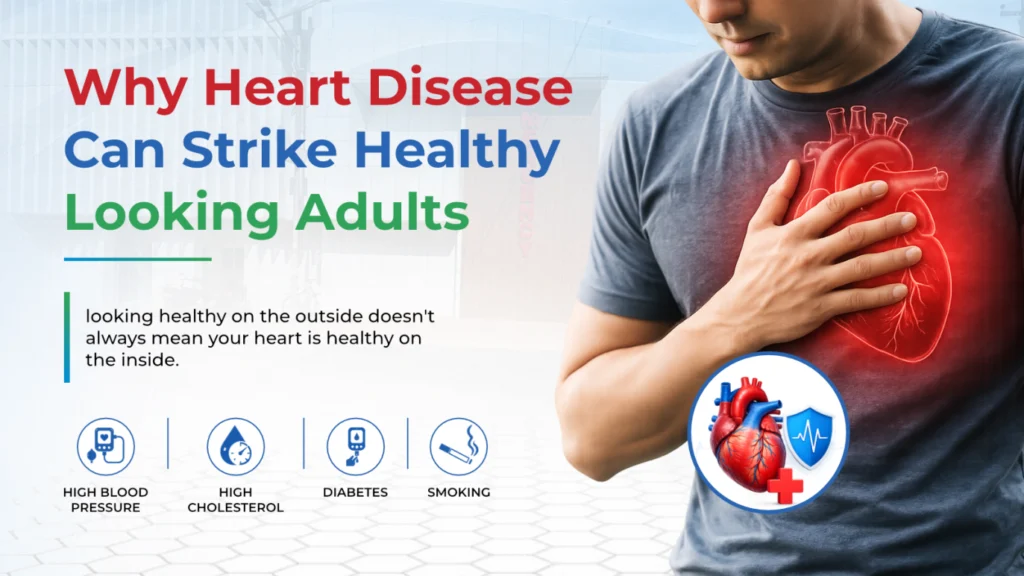
When most people think about heart disease, they picture someone who is aged overweight, or has an unhealthy lifestyle. That’s why it often comes as a surprise when a seemingly healthy person is diagnosed with a heart condition or suffers a heart attack.
The truth is, appearance alone doesn’t tell the whole story. You can look fit, feel energetic, and still have risk factors that quietly affect your heart over time.
Understanding those hidden risks is one of the best ways to protect your health.
Looking Healthy Isn’t the Same as Being Healthy
It’s easy to assume that you’re in good health because you don’t feel sick. Many heart conditions develop slowly, without causing obvious symptoms in the early stages.
High blood pressure, high cholesterol, and diabetes can quietly damage your blood vessels for years. By the time symptoms appear, the disease may already have progressed.
That’s why doctors often recommend regular health checkups, even for people who feel completely well.
Risk Factors You Might Not Notice
Some of the biggest contributors to heart disease aren’t visible.
High Blood Pressure
High blood pressure rarely causes noticeable symptoms, which is why it’s often called a silent condition. Left untreated, it puts extra strain on the heart and increases the risk of heart attack and stroke.
High Cholesterol
Too much cholesterol in the blood can gradually narrow the arteries, making it harder for blood to reach the heart. Most people only discover they have high cholesterol during a routine blood test.
Diabetes
Diabetes affects the body’s ability to regulate blood sugar, but it also damages blood vessels and increases the risk of cardiovascular disease. In many cases, people don’t realize they have diabetes until complications begin to develop.
Family History
Your lifestyle matters, but so do your genes. If a close family member developed heart disease at an early age, your own risk may be higher.
Smoking and Tobacco Use
Smoking damages blood vessels, reduces oxygen in the blood, and makes the heart work harder. Smokeless tobacco also increases the risk of cardiovascular disease.
Stress and Poor Sleep
Long-term stress and consistently poor sleep can contribute to high blood pressure, unhealthy eating habits, and other factors linked to heart disease.
Symptoms That Shouldn’t Be Ignored
Heart disease doesn’t always begin with dramatic chest pain. Sometimes the warning signs are mild enough to dismiss.
Speak with a healthcare professional promptly if you notice:
- Chest pain, pressure, or discomfort
- Shortness of breath
- Pain that spreads to the arm, shoulder, jaw, neck, or back
- Unusual tiredness that doesn’t improve with rest
- Dizziness or fainting
- Cold sweats
- Nausea without a clear cause
- A fast or irregular heartbeat
Women and people with diabetes may experience symptoms that are less typical, which can make early recognition more difficult.
Heart Disease Can Affect Younger Adults Too
Heart disease is no longer seen only in older adults. Sedentary lifestyles, smoking, unhealthy diets, stress, and increasing rates of diabetes have led to more cases in people in their 30s and 40s.
Being young doesn’t guarantee a healthy heart. Paying attention to risk factors early can help prevent problems later in life.
Everyday Habits That Support Heart Health
Looking after your heart doesn’t require drastic changes. Small, consistent habits can make a meaningful difference.
Try to:
- Eat a balanced diet with plenty of fruits, vegetables, whole grains, and lean protein.
- Stay physically active most days of the week.
- Avoid smoking and tobacco products.
- Limit alcohol consumption.
- Get enough sleep each night.
- Find healthy ways to manage stress.
- Keep your weight within a healthy range.
- Check your blood pressure, cholesterol, and blood sugar regularly.
These habits not only support heart health but also reduce the risk of several other chronic diseases.
Why Regular Health Checkups Matter
Many heart-related conditions can be detected before they cause symptoms.
Routine checkups allow doctors to monitor blood pressure, cholesterol, blood sugar, and other important indicators of heart health. Identifying these issues early gives you more options to manage them before they lead to serious complications.
A simple health screening today may help prevent a medical emergency in the future.
When to Seek Medical Advice
If you have a family history of heart disease, high blood pressure, diabetes, or high cholesterol, it’s worth discussing your heart health with a doctor—even if you feel well.
Likewise, don’t ignore persistent chest discomfort, shortness of breath, or unusual fatigue. Getting medical advice early can make a significant difference.
Bharosa Hospital Is Here to Help
Heart disease is easier to manage when it’s detected early. That’s why Bharosa Hospital encourages regular health screenings and timely medical consultations, especially for people with known risk factors or a family history of heart disease.
Our team provides heart health assessments, diagnostic services, and guidance to help patients understand their risk and make informed decisions about their health.
If you have concerns about your heart or would like a routine health checkup, speaking with a qualified healthcare professional is a good place to start. Taking action early can help reduce the risk of serious complications in the future.