You’re 24. Your periods have become irregular. Your skin suddenly breaks out more often than it did as a teenager, and despite eating carefully, the number on the weighing scale keeps increasing. Friends tell you it’s just stress. Family members reassure you that everything will settle after marriage. You convince yourself it’s nothing serious.
Weeks turn into months, but nothing changes.
If that sounds familiar, you’re not alone.
Many women grow up believing that irregular periods are simply something they’ll have to deal with. They blame exam pressure, work, travel, or changing routines. Others are told not to worry because their cycle will become regular with time.
Sometimes that’s true.
But sometimes your body is trying to tell you something more.
One possible reason is Polycystic Ovary Syndrome (PCOS), a hormonal condition that affects many women during their reproductive years. The challenge is that its symptoms don’t always appear all at once, and they don’t look the same for everyone. That makes it easy to overlook, especially in the beginning.
When Something Feels Different
Most women know what’s normal for their own body.
If your periods suddenly become unpredictable, your skin changes without an obvious reason, or you’re gaining weight despite not changing your routine, it’s worth paying attention.
These changes don’t automatically mean you have PCOS. There are several conditions that can cause similar symptoms. The important thing is not to ignore them or assume they’ll simply disappear.
Your body often notices a problem before you do.
It’s About More Than Your Menstrual Cycle
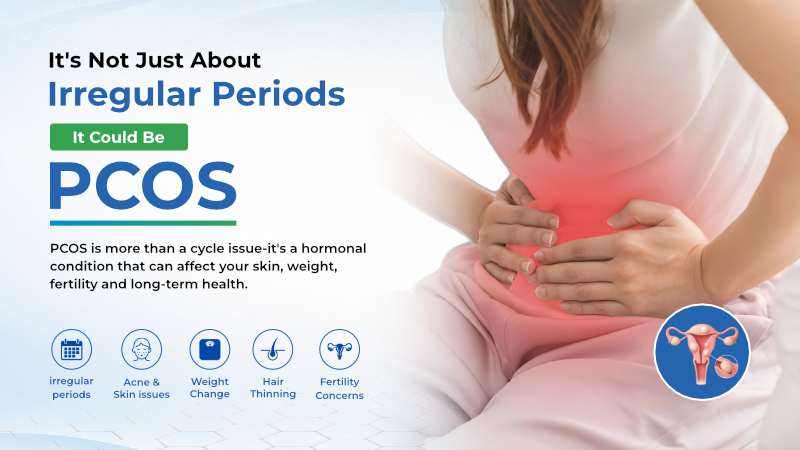
Irregular periods are usually the first symptom people notice, but PCOS doesn’t stop there.
Some women develop persistent acne long after their teenage years. Others notice increased facial hair, thinning hair on the scalp, or weight changes that don’t seem to make sense. Some struggle to become pregnant, while others don’t discover they have PCOS until a routine medical examination.
The condition can also increase the risk of health problems such as type 2 diabetes, high cholesterol, and high blood pressure over time. That’s one of the reasons doctors encourage early evaluation instead of waiting for symptoms to become more severe.
Why More Women Are Talking About PCOS
Not long ago, many women simply accepted irregular periods as part of life. Conversations about menstrual health often stayed within the family, and many concerns never reached a doctor’s office.
That’s changing.
Today, women have easier access to health information and are more willing to ask questions about changes in their bodies. Doctors are also diagnosing PCOS earlier than they did in the past.
At the same time, modern lifestyles may make symptoms harder to manage. Long hours at a desk, limited physical activity, disrupted sleep, and ongoing stress can all affect overall health and may worsen symptoms in some women.
Don’t Wait for a Bigger Problem
One of the most common regrets doctors hear is, “I wish I’d come sooner.”
Some women only seek medical advice when they’re planning a pregnancy. Others wait until their symptoms start affecting daily life.
There’s no benefit in waiting if something doesn’t feel right.
Getting checked doesn’t mean you’ll be diagnosed with PCOS. It simply means you’ll have a better understanding of what’s happening and, if needed, start treatment before complications develop.
Looking After Your Health Doesn’t Have to Be Complicated
Managing PCOS isn’t about following strict diets or chasing quick fixes you see online.
For many women, treatment begins with small, sustainable changes. Eating a balanced diet, staying active, sleeping well, managing stress, and following medical advice can make a real difference. Depending on your symptoms and future plans, your doctor may also recommend medication or other treatments.
Every woman’s experience with PCOS is different, so treatment should be tailored to her needs rather than copied from someone else’s story.
Listen to What Your Body Is Telling You
It’s easy to dismiss changes when life is busy. But your health deserves attention.
If your menstrual cycle has changed, your acne won’t settle, or you’ve noticed other symptoms that don’t feel normal, don’t assume you have to live with them.
The earlier you understand the cause, the sooner you can take steps to protect your long-term health.
How Bharosa Hospital Can Help
Questions about menstrual health can feel personal, and many women hesitate to bring them up. At Bharosa Hospital, our gynecology team provides a supportive environment where women can discuss concerns openly, whether they’re related to irregular periods, hormonal changes, fertility, or PCOS.
A consultation isn’t just about finding a diagnosis. It’s an opportunity to understand your body, ask questions, and receive care that’s based on your individual needs.
If you’ve been putting off that appointment, this may be the right time to have the conversation.